Finding and the registry
The service walks every live stream in the target categories and languages instead of a known list, matches it against the base, enriches the profile and scores geo. It is tuned by config, not code, and runs on the official Twitch API and the public Kick API, with no browser and no logged-in accounts. One schema: a new streamer is checked by platform and login and by social links, so the same person is recognised on another platform. Channels are ranked by views on past broadcasts, not followers.
Geo is an ensemble with a final confidence: stream language, an LLM on the bio, time zone from start times, donation platform and currency, a spot check on Instagram. Countries are never guessed. Contacts come out of public profiles. About 20 ready exports went to the team: top lists, first-contact shortlists, market pilots, esports sponsors.
How many people are really watching
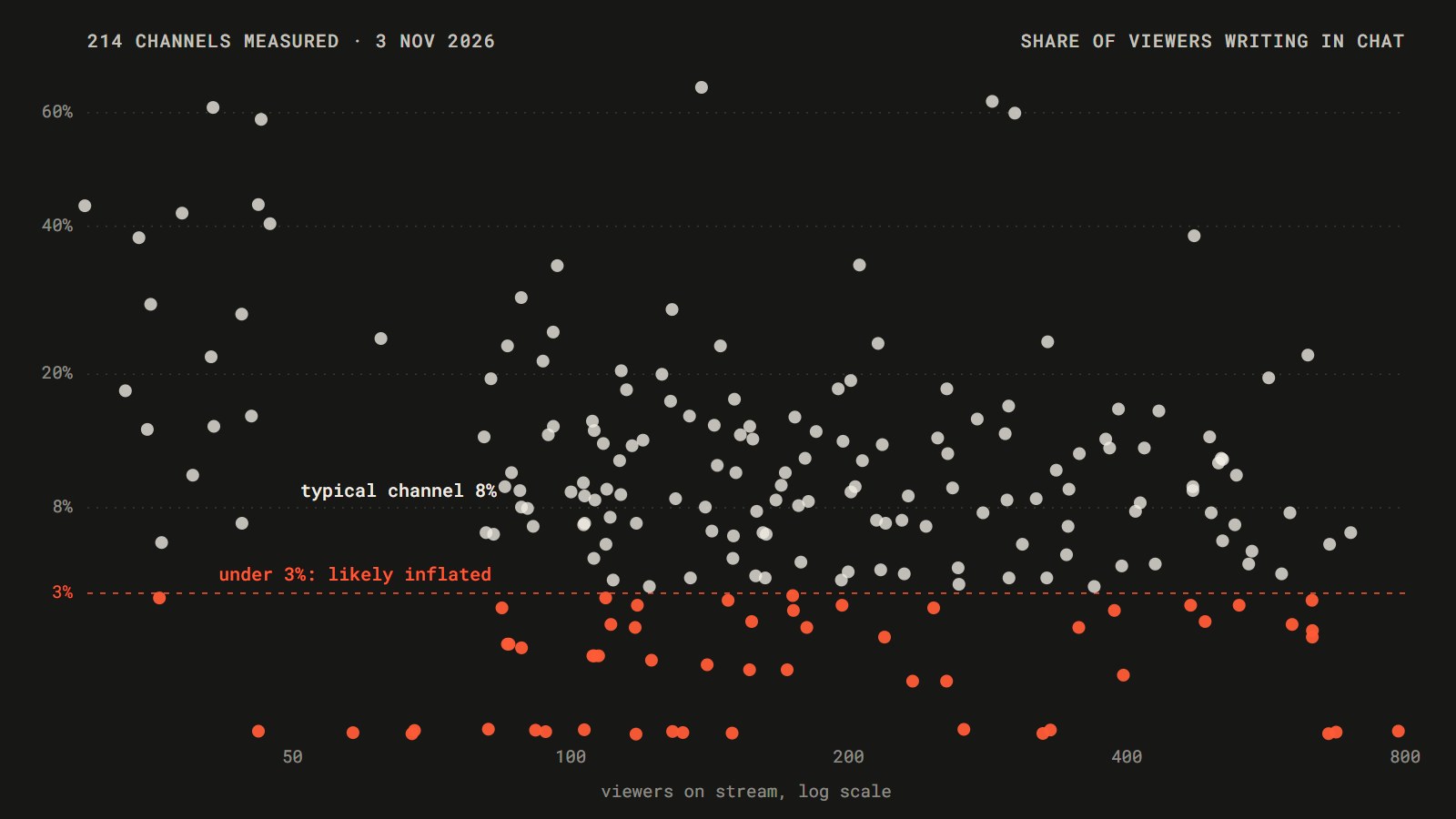
Chats are read anonymously, with no account and nothing sent, counting unique authors and messages per minute, without bots. The old prototype did this through a logged-in account: about two minutes per streamer, unstable, with a ban risk. The share of people writing is a proxy for who is really at the screen. Viewer snapshots every 30 minutes build a series, so you can see who is growing and who is standing still. The chart above is a real measurement of 214 channels, without names.
What a streamer actually did for the money
A stream transcript and the chat with timings, audited against a checklist: how many times the link, the promo code and the call to action were said, and how the chat reacted, all with timecodes. A model reads frames of past streams for brands and promo codes, so existing sponsors are visible. 13 channels reviewed. On one paid 61-minute stream, 2 of 16 mandatory mentions were delivered, with about 17 calls to write in a private Telegram against one mention of the link: the traffic went past the advertiser.
Outreach with a person in the loop
A Telegram bot prepares messages and posts them to the team’s group as cards. Nothing leaves until someone presses Send: Instagram, Telegram and email, templates in five languages, follow-ups on days 3, 7 and 10, daily limits and an automatic pause when a platform complains, a log of who pressed what. The tone comes from 21 recorded negotiations, and Claude rewrites a draft from a comment. Routine is automated, decisions are not. A separate archive keeps the messages, edits and deletions of the team’s work Telegram accounts for future drafts and analytics: work accounts only, and the team knows.
Reels by the numbers
A repeatable format for stream clips, taken from performance rather than taste. A 20-second ceiling, because 35–55 second clips didn’t get views. The cut starts at the climax. Large English subtitles under the face. Key actions land on the beat. Moments are found by spikes in chat activity and, for chess, by the Stockfish evaluation curve. Opus Clip was tested and dropped.